Structural Drying & Dehumidification in Greeley, CO
Surface dry is not dry. The drying team dries framing, subfloor and wall cavities with air movers and LGR dehumidifiers and proves it with daily readings.
(888) 532-8620Get the Greeley drying started today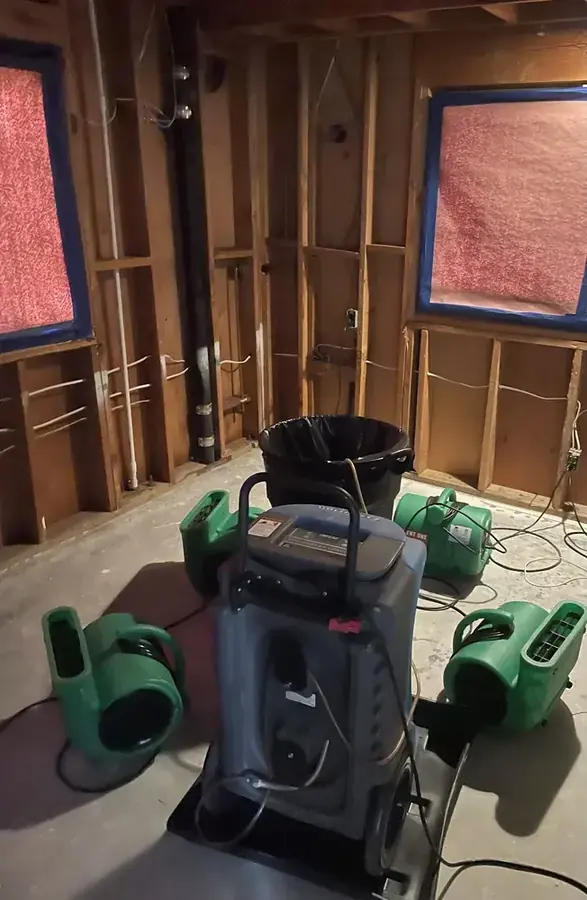
First steps for structural drying and dehumidification in Greeley
- 1
Remove standing water first
Drying equipment cannot keep up with water on the floor.
- 2
Keep the heat moderate
Normal room temperature helps; do not crank the furnace or open windows on humid days.
- 3
Leave the equipment running
Turning air movers off to sleep resets the drying.
- 4
Keep the markers
Reading spots are marked on walls and floors; leave them in place.
How structural drying and dehumidification is handled in Greeley
Rapid local response
The response team rolls day or night across Greeley and Weld County, because a basement keeps soaking up water until extraction starts.
IICRC S500 drying standard
The drying team dries the structure, not just the surface, and pulls the equipment only when the readings say dry.
Claim-ready documentation
The tech who does the walkthrough maps the moisture, photographs the loss before demolition and logs daily readings for the adjuster.
Weld County water experts
Subzero cold snaps, hail season, window wells, swamp coolers and river flooding: local water damage experts know how water moves in a Greeley home.
What does structural drying and dehumidification cost in Greeley, CO?
In Greeley, CO, structural drying typically runs $1,000 to $7,000, depending on the Class of the loss, the number of rooms and how many days of equipment and monitoring it takes to reach the drying goal.
| Scope of the loss | Typical range | What drives it |
|---|---|---|
| One or two rooms, Class 1 or 2 | $1,000 to $2,500 | A few air movers and a dehumidifier for three to five days |
| Basement or several rooms | $2,500 to $5,000 | More equipment, cavity drying, daily readings |
| Hardwood or plaster, Class 4 | $4,000 to $7,000+ | Desiccants, floor drying mats, longer monitoring |
For a closer planning figure, run the water damage cost calculator. The final scope is set on site, after the moisture map.
The structural drying and dehumidification process, step by step
- 1
Map the moisture
The tech who does the walkthrough finds the source, then maps moisture with thermal imaging and pinless meters before any equipment goes down.
- 2
Extract
The extraction crew pulls standing water with truck-mounted extraction, so the water leaves the building instead of spreading.
- 3
Set the drying plan
Air movers go in at each room's evaporation load, with LGR dehumidifiers, or desiccants for Class 4 materials, pulling the moisture back out.
- 4
Verify dry
Most crews log readings daily and pull equipment once wet materials sit within 2 to 4 points of a dry reference material.
Structural drying is the part of a water loss most people never see and the part that decides whether the job is finished. After extraction, water is still inside drywall, framing, subfloor and concrete. Left there, it swells wood, loosens flooring and feeds mold. The drying team removes it on purpose, measures it every day and keeps going until the numbers say the structure is dry.
How the drying plan is built
IICRC S500 is the industry drying standard, and it starts with measurement, not equipment.
- Moisture mapping with thermal imaging and pinless and pin meters
- A dry reference reading from an unaffected part of the same house
- The Class of loss, 1 through 4, which sets how much equipment each room needs
- Air movers placed to the room's evaporation load
- LGR dehumidifiers, or desiccants for Class 4 materials like hardwood and plaster
Greeley's dry air helps in fall and winter. In spring snowmelt and irrigation season, outdoor humidity rises and the dehumidifiers work harder, which is why readings, not the weather, decide the timeline.
Wet floors or walls that still feel damp days later? Readings show what is really wet.
Call (888) 532-8620, structural drying helpDaily monitoring
Most crews take readings daily: moisture content in the wet materials, plus temperature and humidity inside the drying zone and outside it. Those psychrometric readings show whether the equipment is working or needs to be moved or added.
- Readings logged at the same marked spots each day
- Equipment adjusted as areas dry at different rates
- Drying goal: within 2 to 4 points of the dry reference
- Equipment removed only when every area reaches the goal
Why hardwood and plaster take longer
Dense materials give up water slowly. Hardwood floors may need specialty drying mats that pull air through the boards; plaster walls in older central Greeley homes may need desiccant dehumidifiers and extra days.
When drying is paired with removal
Some materials are removed rather than dried: anything touched by Category 3 water, drywall that has lost its strength, and insulation that has soaked through. The rest is dried in place. For the first step, see emergency water extraction; for contaminated water, see sewage backup cleanup. The EPA mold pages explain why drying within 24 to 48 hours matters, and OSHA flood cleanup guidance covers worker safety during drying and removal.
Structural Drying and Dehumidification across Greeley and Weld County
Coverage for structural drying and dehumidification runs across every Greeley ZIP and the towns around it.
Local water damage experts cover all of Greeley, from the Poudre on the north side to the South Platte and Evans on the south, with rapid local response around the clock.
Coverage takes in Greeley, Evans, Garden City, Windsor, Eaton, Kersey, LaSalle, Johnstown, Milliken and Severance, plus ZIP codes 80631, 80634 and 80639.
See every neighborhood and ZIP coveredStructural Drying and Dehumidification questions, answered
Why can't fans and open windows dry a flooded room?
Fans move surface air but do not pull water out of framing and subfloor, and open windows can bring humid air in. Structural drying balances air movers with dehumidifiers and measures the result.
What does the drying goal mean?
Wet materials are compared to a dry reference material elsewhere in the same house. Drying is done when they read within 2 to 4 points of that reference.
How long does structural drying take?
Three to five days is common for a contained Class 1 or 2 loss. Hardwood, plaster and concrete take longer, and the readings decide when equipment leaves.
Is the equipment loud?
Air movers and dehumidifiers make steady noise and some heat. They need to run around the clock for drying to stay on schedule.
What is an LGR dehumidifier?
Low grain refrigerant dehumidifiers pull more water from the air at lower humidity levels than ordinary units, which makes them effective late in a dry-out.
What are desiccant dehumidifiers used for?
Desiccants dry air to very low humidity and suit Class 4 materials like hardwood, plaster and concrete, and cold spaces where refrigerant units slow down.
Is the drying documented for insurance?
Yes. The moisture map, daily readings and equipment logs form the drying record adjusters look for.
Structural Drying and Dehumidification in Greeley? Get the drying started today.
Standing water keeps wicking into drywall, trim and subfloor for as long as it sits. The Greeley restoration crew extracts, dries to the IICRC S500 standard and documents the loss.