Basement Flooding Cleanup in Greeley, CO
From brick-walled basements near downtown to finished lower levels in west Greeley, the mitigation team pumps out the water and dries the basement to a verified reading.
(888) 532-8620Flooded basement? Get the Greeley drying started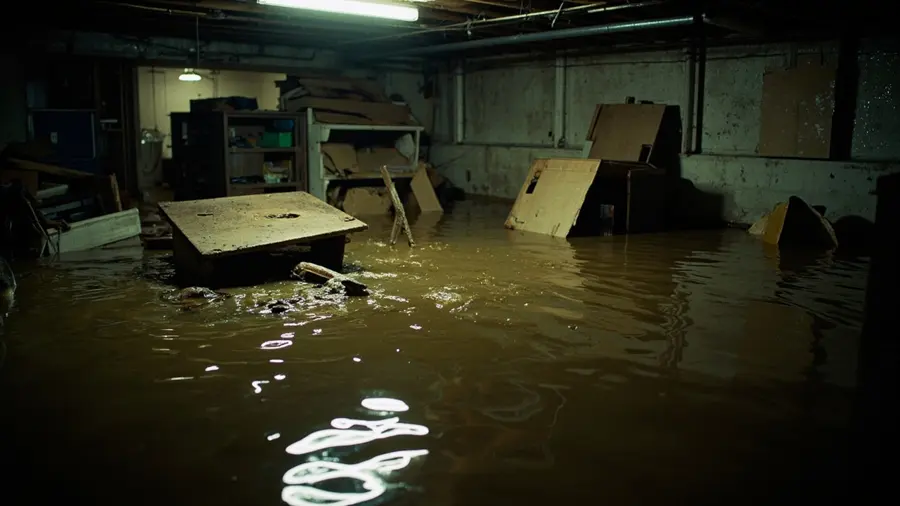
First steps for basement flooding cleanup in Greeley
- 1
Stay off the stairs
Do not wade in if outlets, cords or appliances are underwater.
- 2
Stop the source
Shut the main or the water heater supply if that is the cause.
- 3
Photograph the water
Capture the depth line on walls and every damaged item.
- 4
Call for pump-out
Standing water keeps wicking into drywall and framing.
How basement flooding cleanup is handled in Greeley
Rapid local response
The response team rolls day or night across Greeley and Weld County, because a basement keeps soaking up water until extraction starts.
IICRC S500 drying standard
The drying team dries the structure, not just the surface, and pulls the equipment only when the readings say dry.
Claim-ready documentation
The tech who does the walkthrough maps the moisture, photographs the loss before demolition and logs daily readings for the adjuster.
Weld County water experts
Subzero cold snaps, hail season, window wells, swamp coolers and river flooding: local water damage experts know how water moves in a Greeley home.
What does basement flooding cleanup cost in Greeley, CO?
In Greeley, CO, basement flooding cleanup typically runs $2,000 to $12,000, depending on the water category, how much of the basement is finished and how many square feet took water.
| Scope of the loss | Typical range | What drives it |
|---|---|---|
| Unfinished basement, clean water | $2,000 to $3,500 | Pump-out, cleaning, a few days of drying |
| Finished basement, clean water | $3,500 to $7,000 | Pad removal, flood cuts, cavity drying |
| Sewage or floodwater | $7,000 to $12,000+ | Category 3 removal, containment, antimicrobial, full drying |
For a closer planning figure, run the water damage cost calculator. The final scope is set on site, after the moisture map.
The basement flooding cleanup process, step by step
- 1
Map the moisture
The tech who does the walkthrough finds the source, then maps moisture with thermal imaging and pinless meters before any equipment goes down.
- 2
Extract
The extraction crew pulls standing water with truck-mounted extraction, so the water leaves the building instead of spreading.
- 3
Set the drying plan
Air movers go in at each room's evaporation load, with LGR dehumidifiers, or desiccants for Class 4 materials, pulling the moisture back out.
- 4
Verify dry
Most crews log readings daily and pull equipment once wet materials sit within 2 to 4 points of a dry reference material.
Basements are standard in Greeley, and they take most of the city's water damage. Water finds the lowest floor whether it comes from a burst line upstairs, a water heater in the utility room, a failed sump, a window well or groundwater pushing through the slab. Cleanup depends on where the water came from, because the source decides the category.
Two kinds of Greeley basements
Older homes around downtown, Glenmere and the University District often have brick or stone foundation walls, low ceilings and floor drains tied to aging sewer laterals. Newer homes in west Greeley have poured walls, finished drywall, carpet, sump pits and egress window wells. Both flood; they dry differently.
- Stone and brick walls hold moisture and dry slowly
- Finished basements hide water behind drywall and under carpet pad
- Floor drains in older homes can back up sewage into the room
- Irrigation season raises the water table under west-side slabs
Water standing in the basement? Keep off the stairs if outlets are underwater, and call for extraction.
Call (888) 532-8620, basement flooding helpHow a flooded basement is cleaned up
The extraction crew pumps out standing water, then the tech who does the walkthrough maps moisture up the walls and under the floor. What happens next depends on the water category.
- Category 1 water: carpet and drywall can often be dried in place
- Category 2 water: pad usually comes out, and surfaces are cleaned
- Category 3 water: porous materials it touched are removed behind containment
- Flood cuts above the water line so wall cavities can dry
- Air movers, LGR dehumidifiers and daily readings until dry
The drying goal
Equipment stays until the readings say dry. The goal is wet materials within 2 to 4 points of a dry reference material elsewhere in the same house, logged daily for the claim file.
Finding the source
The cause changes both the cleanup and the claim. A failed pump belongs on the sump pump failure page, a flooded window on window well flooding, and a floor drain backing up on sewage backup cleanup. River and overland water is covered by flood policies; the FEMA Flood Map Service Center shows whether a Greeley address sits in a mapped flood zone, and the Colorado Division of Insurance explains flood and water coverage in plain terms.
Basement Flooding Cleanup across Greeley and Weld County
Coverage for basement flooding cleanup runs across every Greeley ZIP and the towns around it.
Local water damage experts cover all of Greeley, from the Poudre on the north side to the South Platte and Evans on the south, with rapid local response around the clock.
Coverage takes in Greeley, Evans, Garden City, Windsor, Eaton, Kersey, LaSalle, Johnstown, Milliken and Severance, plus ZIP codes 80631, 80634 and 80639.
See every neighborhood and ZIP coveredBasement Flooding Cleanup questions, answered
Can a finished basement be saved after a flood?
Often, when the water is clean and drying starts quickly. Carpet may be dried in place and walls vented at the bottom. With sewage or floodwater, porous materials it touched are removed instead.
Why does basement drywall get cut at 2 feet?
A flood cut above the water line removes the wicked drywall and lets air reach the wall cavity. The height follows the moisture readings, not a fixed number.
How long does a basement take to dry?
Three to five days is typical for a contained clean-water loss. Brick or stone walls, concrete slabs and larger areas take longer.
Is basement flooding covered by insurance?
Water from a burst pipe or appliance is commonly covered, groundwater and surface water are usually excluded without flood coverage, and sewer backup often needs an endorsement. Coverage depends on your policy, so it is worth checking with your own insurer.
Why does the basement smell musty after it dries?
A lingering smell usually means moisture is still trapped somewhere, often under flooring or in a wall. Meters find it so it can be dried or removed.
What should be thrown out after a basement flood?
Anything porous that sat in sewage or floodwater, like upholstered furniture, mattresses and cardboard, is usually discarded. Photograph items before they go out for the claim.
Does the water heater or furnace need checking?
Yes, if water reached them. Gas appliances and electrical panels touched by water should be checked by a qualified technician before use.
Basement Flooding Cleanup in Greeley? Get the drying started today.
Standing water keeps wicking into drywall, trim and subfloor for as long as it sits. The Greeley restoration crew extracts, dries to the IICRC S500 standard and documents the loss.